

Few academic labs have shaped a commercial industry the way the Stanford Vision and Learning Lab (SVL) has shaped artificial intelligence. The group sits at the intersection of computer vision, machine learning, and robotics, and its fingerprints are on the datasets, the products, and the founders driving today’s AI economy.
For founders watching where the next wave of AI companies comes from, SVL is worth understanding. It produces two things in steady supply: research that advances the field, and people who go on to build companies and run the teams behind some of the most important AI systems in use today.
The Lab Behind Modern Computer Vision
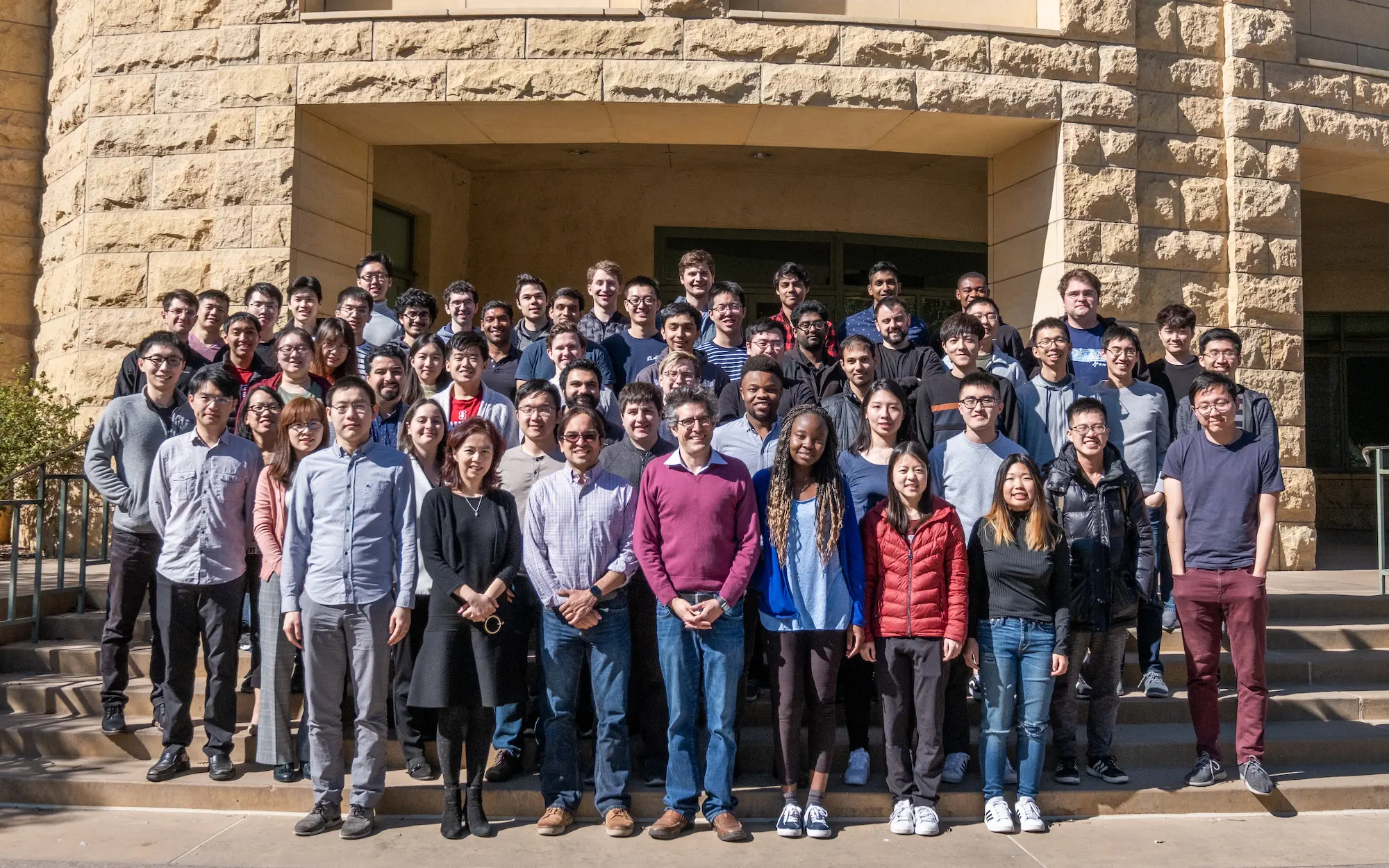
SVL came together when two Stanford groups merged: the Stanford Vision Lab and the Stanford Computational Vision and Geometry Lab. Combining them created a single, unusually broad operation covering core computer vision plus specialised subgroups in 3D perception (the kind that powers self-driving cars), robotics, and healthcare.
Three names anchor the lab. Fei-Fei Li, the Sequoia Professor of Computer Science at Stanford and co-director of the Stanford Institute for Human-Centered AI, is widely credited as one of the architects of modern computer vision through ImageNet.
Silvio Savarese, a Stanford professor who also serves as Executive Vice President and Chief Scientist at Salesforce, leads work spanning perception and social robotics.
Juan Carlos Niebles, a Stanford adjunct professor and Research Director at Salesforce AI Research, focuses on the meeting point of vision, multimodal AI, and autonomous agents. All three remain co-directors of the lab.
The mission tracks the broader AI research community, narrowed to vision: build and push forward technologies that have a beneficial impact, then share the tools widely enough that the rest of the field can build on them.
From Research to the Real World
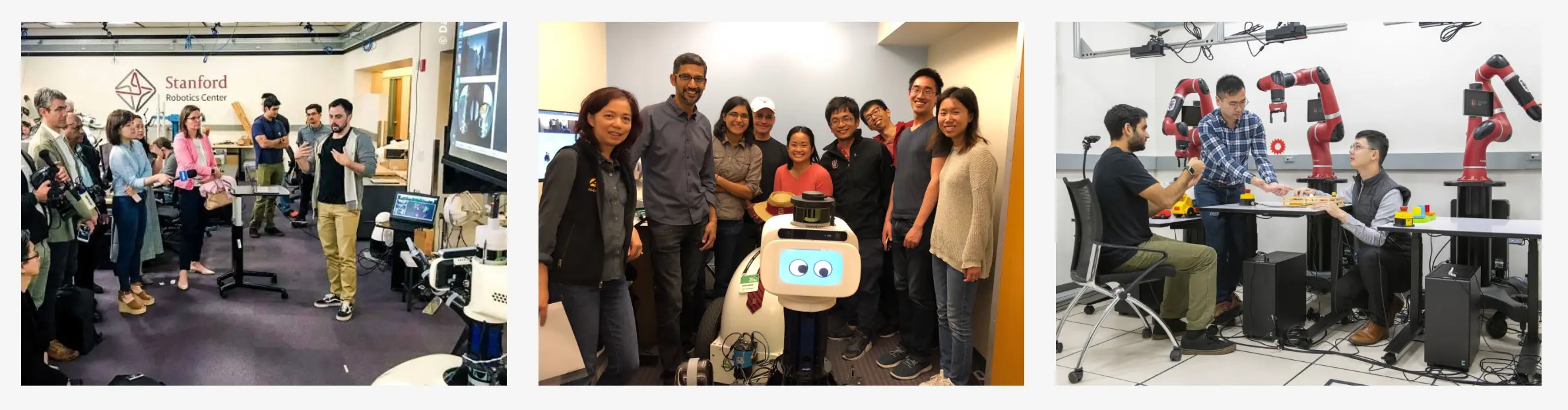
SVL has never treated computer vision as a purely theoretical exercise. The Jackrabbot, a self-navigating electric delivery cart, is one example. Designed to operate in pedestrian spaces like the Stanford campus, it was built to read and anticipate human movement so it can share walkways without a driver. The hard problem there is social, not mechanical: predicting where people will go, not just detecting their existence.
On the healthcare side, the lab partnered with the Stanford University School of Medicine through the Partnership in AI-Assisted Care (PAC). The collaboration applied computer vision and machine learning to clinical settings, with projects covering hand-hygiene monitoring, senior well-being, burn assessment, and activity detection in intensive care units. The throughline is using perception to improve care while lowering the cost barriers that keep good outcomes out of reach.
The Datasets That Trained an Industry
If SVL is known for one thing beyond its research, it is the datasets it has handed to the wider community.
ImageNet predates the lab itself, but it laid the groundwork for the deep learning boom. Built on the noun hierarchy of WordNet, a lexical database used in computational linguistics, it pairs thousands of images with each concept node. Its associated competition, the ImageNet Large Scale Visual Recognition Challenge (ILSVRC), pushed researchers to classify and annotate objects with steadily improving accuracy. The breakthrough neural network result posted on ImageNet in 2012 is widely cited as the moment deep learning arrived. The challenge later moved to Kaggle as its host.
Datasets that came after the lab formed extended the same idea in new directions. The Visual Genome connects structured image concepts to human language through millions of descriptions, objects, attributes, relationships, and question-answer pairs, the raw material machines need to reason about what they see.
ObjectNet3D targets 3D object recognition inside 2D images, the groundwork for robotics, autonomous driving, and augmented reality. Through PAC, the lab also built BURNED, a set of more than 1,000 burn images outlined by plastic surgeons and labelled by depth, intended to train systems that can predict burn severity and improve treatment decisions.
A Talent Pipeline for the AI Economy
The lab’s most underrated output might be its people. Students often join while still pursuing a master’s, or even as undergraduates attached to a larger project, then take on more responsibility until they become a core part of the research. That model produces a steady stream of graduates who go on to shape both academia and industry.
The roster is striking. Andrej Karpathy completed his PhD at the lab under Fei-Fei Li, then went on to lead AI for Tesla’s Autopilot, co-found OpenAI, and launch the education startup Eureka Labs.
In 2026, he joined Anthropic’s pretraining team. Timnit Gebru, who worked on fine-grained visual recognition during her Stanford years, founded the Distributed AI Research Institute (DAIR) after a high-profile departure from Google’s ethical AI team.
Jia Li went on to head R&D at Google Cloud AI. Olga Russakovsky, a key contributor to the ImageNet challenge, is now a professor at Princeton, where she runs her own vision and learning lab and co-founded the AI education nonprofit AI4ALL.
The lab’s directors have followed the same build-and-ship instinct. Fei-Fei Li co-founded World Labs in 2024 to pursue “spatial intelligence,” AI that understands and generates 3D environments, and the company reached a multibillion-dollar valuation within two years. Savarese’s work at Salesforce sits behind the company’s enterprise AI agent platform. The pattern is hard to miss: research at SVL rarely stays in the lab.
Why It Matters for Founders
For anyone trying to understand where AI talent and AI companies come from, SVL is a useful map. It shows how a single research group can seed an entire commercial ecosystem, from the datasets that train the models to the founders who turn the research into products.
After years of operating in its combined form, the question its leaders keep returning to is whether a lab this large and this broad can compound its own advantages, turning the sheer range of work happening under one roof into collaboration that smaller groups cannot match.
The future of artificial intelligence is being shaped in many places. A surprising amount of it traces back to this one.

